





Toilet training a child on the autism spectrum often takes longer, requires more structure, and calls for a different approach than standard potty training advice. If you’ve tried the usual tips and felt stuck, you’re not alone — sensory sensitivities, communication differences, and a strong preference for routine all shape how a child learns this skill. This guide breaks down what actually works, backed by behavioral therapy principles and real-world counselling experience.
Why Toilet Training Looks Different for Autistic Children
Toilet training is rarely a simple milestone for children on the spectrum. Several overlapping factors can slow progress:
- Sensory processing differences — the feeling of urine or stool, toilet flushing sounds, or the texture of toilet paper can be genuinely distressing.
- Interoception challenges — some children have difficulty recognizing internal body signals like a full bladder.
- Communication gaps — a child may not yet have the words or gestures to signal “I need to go.”
- Rigid routines — sudden changes to daily habits can trigger anxiety or resistance.
- Motor planning difficulties — the multi-step sequence of undressing, sitting, wiping, and dressing again can be overwhelming.
Understanding these underlying reasons — rather than assuming a child is simply “not ready” — is the first step toward an effective toilet training plan.
How This Differs From Typical Potty Training
Standard potty training programs often rely on verbal cues, short attention spans for reward systems, and quick three-day methods. For many autistic children, these fast-track approaches fail because they don’t account for sensory needs or the extra processing time required to build a new routine. Effective toilet training on the spectrum usually takes weeks or months, not days, and success depends heavily on consistency across home, school, and therapy settings.
Signs of Readiness Before Starting Toilet Training
Before beginning, look for these readiness indicators:
- The child stays dry for at least 1–2 hours at a time.
- They show physical signs of needing to go (fidgeting, grabbing, hiding).
- They can sit comfortably for 3–5 minutes.
- They tolerate the bathroom environment without significant distress.
- They can follow at least simple one-step instructions.
Readiness isn’t only about age. Many children on the spectrum begin toilet training later than neurotypical peers, and that’s developmentally appropriate — not a failure on the parent’s or child’s part.
Step-by-Step Toilet Training Strategies That Work
1. Build a Visual Schedule
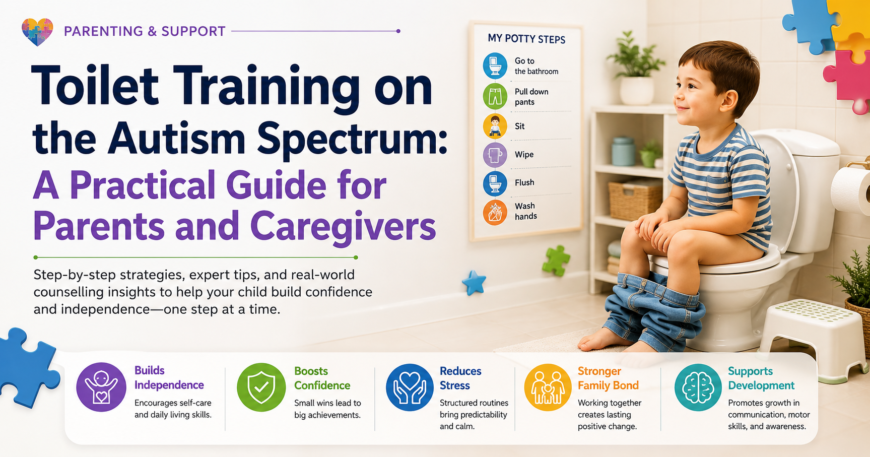
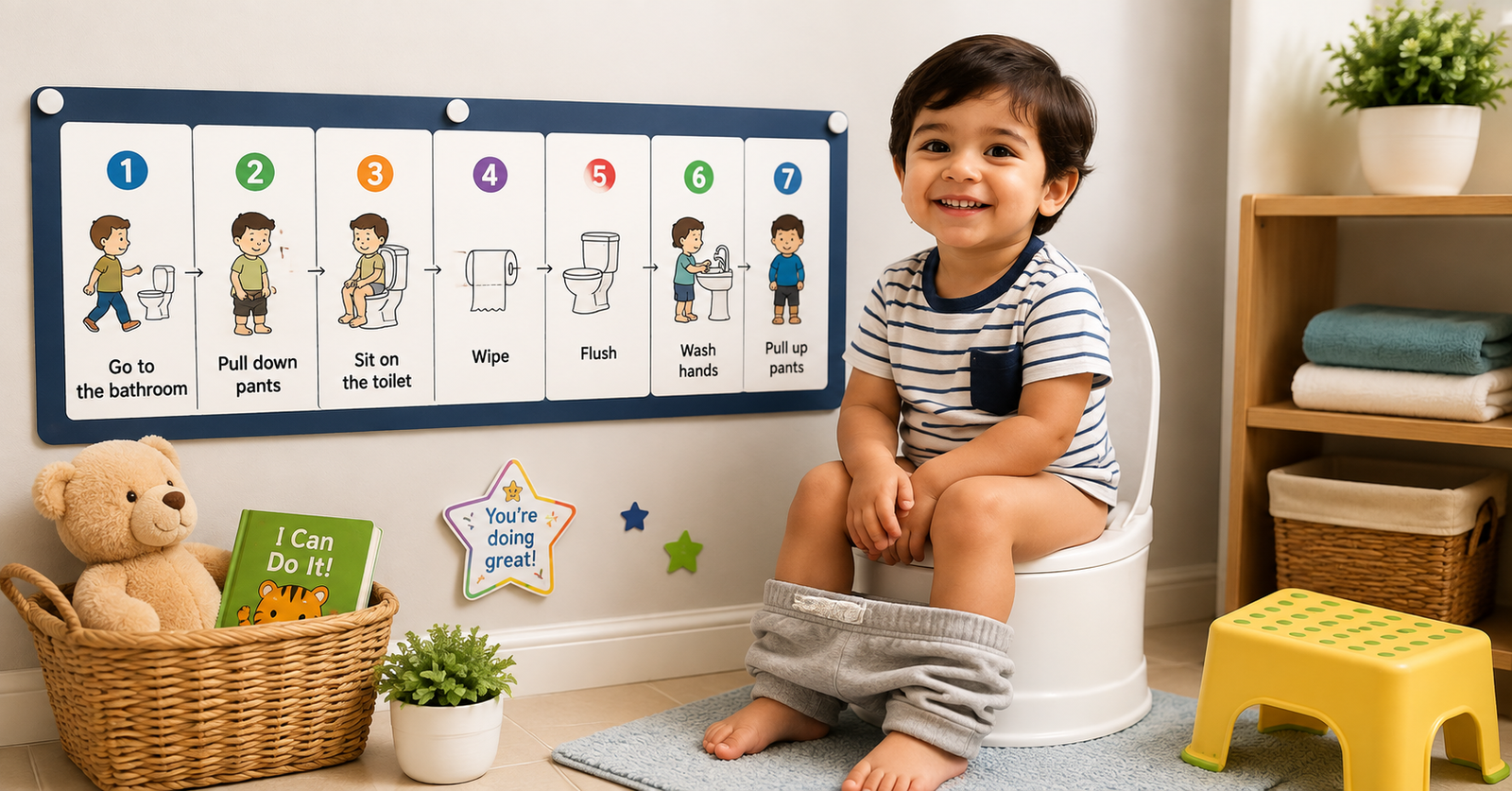
Visual supports reduce anxiety by making the process predictable. Use a simple picture sequence showing each step: walk to bathroom, pull down pants, sit, wipe, flush, wash hands, wear pants. Laminate it and post it at eye level in the bathroom.
2. Use Scheduled Sitting, Not Just Cue-Based Attempts
Rather than waiting for signs of needing to go, set a consistent timer — every 60 to 90 minutes — for bathroom sits. This “scheduled toileting” method builds a predictable routine the child can rely on, independent of interoceptive awareness.
3. Keep Sits Short and Positive
Two to five minutes is enough. Bring a preferred item — a favorite book, a small toy, or a fidget — to keep the sit calm rather than stressful. Never force a child to stay seated longer than they can tolerate; it builds negative associations that slow progress.
4. Address Sensory Barriers Directly
- Try a padded toilet seat or step stool for stability and comfort.
- Test different toilet paper textures.
- Reduce noise by muffling the flush or letting the child leave before flushing at first.
- Consider a quieter, dimmer bathroom setup if sensory overload is a concern.
5. Pair Toilet Training With Reinforcement
Immediate, consistent reinforcement works better than delayed rewards. A small preferred item, a favorite phrase, or two minutes of a preferred activity right after success helps the brain connect the action with the outcome.
6. Teach Communication Alongside Toileting
If a child is nonverbal or has limited speech, pair toilet training with a communication method — a picture exchange card, a single-word device button, or a simple sign for “bathroom.” This gives the child a way to initiate requests rather than relying solely on caregiver-led timing.
Benefits of a Structured Toilet Training Approach
- Increased independence in daily self-care routines.
- Reduced caregiver burden over time, particularly for school and childcare transitions.
- Improved self-esteem, as toileting success often builds confidence in other skill areas.
- Better hygiene and health outcomes, reducing skin irritation and infection risk from prolonged diaper use.
Common Challenges Families Face
- Regression after illness, travel, or schedule disruption.
- Refusal to use unfamiliar bathrooms (school, public spaces).
- Constipation or withholding behaviors linked to sensory discomfort.
- Difficulty generalizing the skill across settings and caregivers.
These setbacks are normal. Toilet training success is rarely linear, and a temporary regression doesn’t mean the plan has failed.
Expert Insight: What Autism Counsellors Recommend
Behavioral counsellors working within the autism spectrum typically recommend combining Applied Behavior Analysis (ABA) principles with occupational therapy input for sensory regulation. In practice, this means:
- Data tracking: logging accidents and successes for two weeks before starting formal training to identify natural patterns.
- Cross-setting consistency: aligning the same visual schedule and reinforcement system between home, school, and any therapy providers.
- Gradual fading of prompts: moving from full physical guidance to verbal reminders to full independence over time.
One frequently cited example from clinical practice: a child who resisted sitting on the toilet for months made steady progress once the family switched from a standard toilet seat to a smaller, more secure insert and began playing calming audio during sits. The sensory adjustment — not a stricter reward system — was the turning point. This illustrates a core principle in autism counselling: behavior is communication, and resistance often signals an unmet sensory or communication need rather than simple non-compliance.
Read More:- Applied Behavior Analysis Near Me – Spectrum Of Autism Counselling
Practical Tips for Long-Term Success
- Start during a stable period — avoid launching toilet training during a house move, new sibling arrival, or school transition.
- Use the same words consistently (“toilet,” “potty,” “go”) across all caregivers.
- Keep a simple daily log for the first month to spot patterns in timing.
- Loop in the child’s therapy team (ABA therapist, OT, speech therapist) so strategies stay consistent.
- Celebrate small wins — sitting without distress counts as progress, even before actual elimination success.
Toilet training a child on the autism spectrum takes patience, structure, and a willingness to adapt standard methods to fit sensory and communication needs. With a visual schedule, scheduled sits, sensory accommodations, and consistent reinforcement, most children can build this skill successfully — even if it takes longer than typical potty training timelines. Progress may not be linear, but with the right support system in place, toilet training becomes an achievable milestone rather than a source of ongoing stress for the whole family.
Spectrum Of Autism Counselling – NAP Information
Business Name: Spectrum Of Autism Counselling
Address: 2201 Finch Ave W, Unit #5, Toronto, ON M9M 2Y9, Canada
Phone: +1 365-654-2789
Email: info@spectrumautismcounselling.ca
Website: https://spectrumautismcounselling.ca/
Google Business Profile: https://maps.app.goo.gl/LDA79s8JTrSErQQv8
Frequently Asked Questions
At what age should toilet training start for a child on the autism spectrum?
There’s no fixed age. Readiness depends on developmental signs like staying dry for an hour or more and tolerating the bathroom environment, which can occur anywhere from age 3 to well into the early school years.
How long does toilet training usually take for autistic children?
It varies widely, but many families see initial progress within 4–8 weeks of consistent scheduled toileting, with full independence sometimes taking several months.
What’s the difference between toilet training and potty training?
The terms are often used interchangeably, though “potty training” is commonly associated with toddlers using a standalone potty, while “toilet training” can refer to the broader skill of using any toilet, including transitions to a full-size seat.
Why does my child resist sitting on the toilet?
Resistance is often linked to sensory discomfort, fear of flushing sounds, or anxiety about an unfamiliar routine — not defiance. Identifying and adjusting the specific trigger usually resolves the resistance.
Should I consult a professional for toilet training support?
Yes, especially if progress stalls after 8–12 weeks. An ABA therapist or occupational therapist can assess sensory and behavioral factors and tailor a plan specific to the child’s needs.
VISIT Social Media:-
Facebook:- Spectrum of Autism Counselling | Toronto ON
Instagram:- Spectrum of Autism Counselling | Toronto ON